For someone living with diabetes, a small blister or a tiny crack in the heel is not a small thing. Diabetes can dull feeling in the feet and slow the way the body heals, so a minor injury can go unnoticed for days and turn into something serious. The encouraging part is that most foot problems in diabetes are preventable with a few simple habits done every day.
Short answer: daily foot care for diabetes means checking your feet every day, washing them gently in lukewarm water, drying them well between the toes, moisturising the skin but not between the toes, wearing clean socks and well-fitting shoes, and never walking barefoot. Any wound, blister, redness or swelling that does not settle quickly needs a doctor. This guide gives general information and does not replace advice from your own doctor or diabetes care team.
Below you will find why diabetes affects the feet, a practical daily routine, what to look for when you check your feet, which habits to avoid, and when to get medical help without waiting.
Why Diabetes Affects the Feet
Two problems cause most of the trouble, and they often appear together.
- Nerve damage (neuropathy): high blood sugar over time can damage nerves, especially in the feet. You may feel tingling, burning or numbness, or you may feel nothing at all. Without pain as a warning, a cut, a blister or a pebble in a shoe can go unnoticed.
- Reduced blood flow: diabetes can narrow the blood vessels in the legs and feet. Less blood means less oxygen and fewer healing cells reaching the skin, so wounds heal slowly.
- Dry, cracked skin: nerve damage can reduce sweating in the feet, which leaves skin dry and prone to cracks that bacteria can enter.
- Infection risk: high blood sugar makes it harder to fight infection, so a small wound can become an ulcer or a deeper infection.
These problems build slowly, which is why daily care and regular check-ups matter more than any single product.
A Daily Foot Care Routine
- Look at your feet: check the tops, soles, heels and between the toes every day. Use a mirror or ask someone to help if you cannot see the bottoms.
- Wash gently: use lukewarm water and a mild cleanser. Wash, rinse and finish quickly. Long soaks dry the skin.
- Dry carefully: pat dry with a soft towel, especially between the toes, where moisture can cause fungal infection.
- Moisturise the skin: apply a plain moisturiser to the tops and bottoms of the feet, but not between the toes.
- Put on clean socks: choose soft, seamless socks that are not tight at the top.
- Check your shoes: feel inside for stones, rough seams or anything sharp before you put them on.
The whole routine takes about ten minutes, and the daily check is the most important part.
How to Wash Diabetic Feet
Washing sounds simple, but a few details matter when sensation is reduced.
- Test the water with your hand or elbow: if your feet are numb, you may not feel water that is too hot, and burns are a real risk. Never test the water with your feet.
- Use a gentle cleanser: avoid strong soaps and scrubs, which dry and irritate the skin. Our guide to face wash for dry skin explains why gentle, non-stripping cleansers protect the skin barrier, and the same idea applies to feet.
- Do not scrub: use your hands or a soft cloth. Pumice stones and rough tools can break the skin.
- Rinse well: leftover cleanser can irritate.
- Dry completely: this step prevents most fungal problems between the toes.
Moisturising, Nails and Calluses
Moisturising
Dry skin cracks, and cracks let infection in. Apply a plain, fragrance-free moisturiser once or twice a day to the tops and bottoms of your feet. Keep it out from between the toes, because trapped moisture there encourages fungus.
Nails
Trim nails straight across after washing, when they are softer, and file sharp edges gently. Do not cut into the corners or round the edges, which can cause ingrown nails. If your nails are thick, curved, discoloured or hard to reach, or if your eyesight is poor, ask a podiatrist or your doctor to trim them.
Calluses and corns
Do not cut calluses or corns yourself, and avoid over-the-counter corn removers, which often contain acids that can burn the skin. A podiatrist can treat them safely.
Shoes and Socks
- Fit matters: shoes should have enough room for your toes and no tight spots. Buy them later in the day, when feet are slightly larger.
- Break shoes in slowly: wear new shoes for short periods at first and check your feet afterwards.
- Choose soft, seamless socks: cotton or moisture-wicking socks that are not tight at the top help circulation. Change them daily, or more often if your feet sweat.
- Do not go barefoot: this includes at home, on hot floors, on pavement, and in places where shoes are removed. Wear clean socks or soft house slippers where you can.
- Avoid open or thin sandals: they leave the skin exposed to cuts and burns.
- Shake out your shoes: check for insects, stones and rough areas before putting them on.
What to Look for When You Check Your Feet
| What you see or feel | What it may mean | What to do |
|---|---|---|
| Dry, flaking or cracked skin | Dryness or reduced sweating | Moisturise daily, watch for deep cracks |
| Redness or a red streak | Irritation or infection | Call your doctor the same day if it spreads or persists |
| Blisters, cuts or sores | Injury that may heal slowly | Keep clean, do not pop, and have it checked quickly |
| Swelling, warmth or pain | Possible infection or other problem | Seek medical advice promptly |
| Pus, bad smell or drainage | Likely infection | See a doctor urgently |
| Black, blue or very pale skin | Poor blood flow | Treat as an emergency |
| New numbness, tingling or burning | Nerve changes | Tell your doctor at your next visit, sooner if sudden |
| Athlete’s foot or peeling between toes | Fungal infection | Ask a pharmacist or doctor for treatment |
Habits That Protect Your Feet
- Keep blood sugar in your target range: this is the single biggest protection for nerves and circulation.
- Do not smoke: smoking narrows blood vessels and slows healing.
- Stay active: regular walking helps circulation, if your doctor says it is safe for you.
- Avoid heat on the feet: do not use hot water bottles, heating pads or sit with feet very close to a heater.
- Avoid long soaks: they dry the skin and increase the risk of cracks.
- Get a foot exam at least once a year: a doctor or podiatrist can test sensation and circulation, and many people need checks more often.
Where Diabex Fits
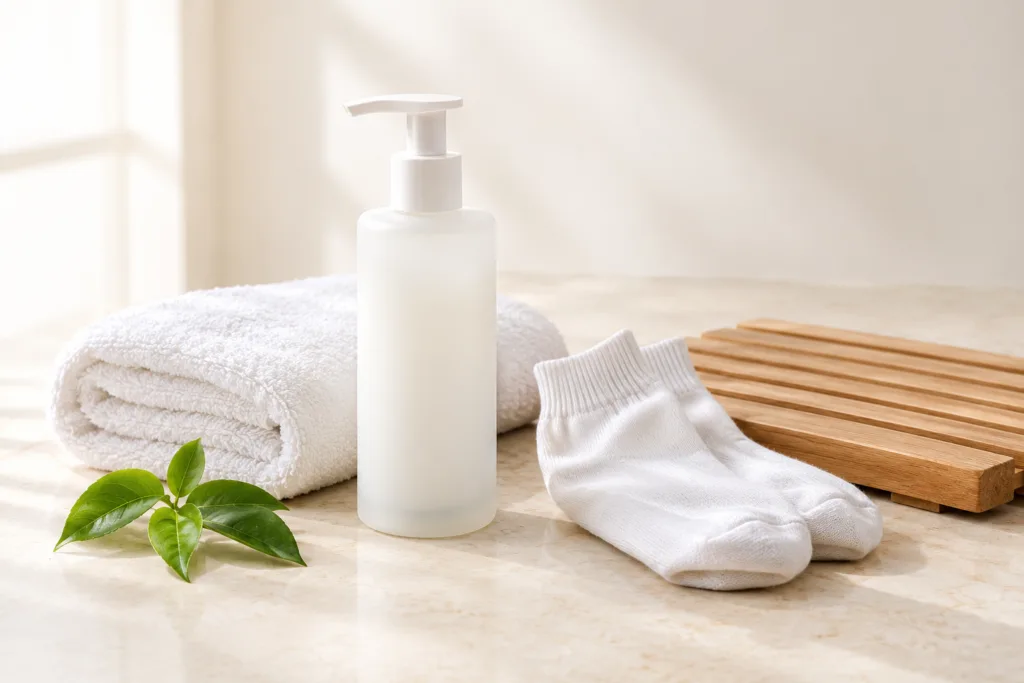
Full disclosure: this is our own product, so weigh this section with that in mind. The Nøréva Diabex Diabetic Foot Wash comes in a 250ml bottle and is described as a gentle, non-irritating cleanser made for diabetic and sensitive foot skin. The directions say to wet feet with warm water, apply a small amount to your palms or a soft cloth, massage gently over the feet and between the toes, rinse thoroughly, and pat dry completely, especially between the toes. It is marketed by McKenzy Pharma.
The product page is clear that this is a cosmetic hygiene wash and not a treatment for diabetic foot complications. It can be one step in a daily routine, but it does not replace daily checks, good shoes, blood sugar control or medical care. If you have wounds, numbness or any foot concern, follow your doctor’s advice first. We do not claim an ingredient list or concentration here, since the product page does not give one.
When to See a Doctor
Get medical help promptly, and do not wait for it to get better on its own, if you notice any of the following:
- An open wound or blister: especially one that is slow to heal or on the sole of the foot.
- Redness that spreads, swelling or warmth: these can signal infection.
- Pus, a bad smell or drainage: these need urgent care.
- Black or discoloured skin: this is an emergency.
- Fever with a foot problem: go to a doctor or hospital the same day.
- Sudden new pain, numbness or a change in the shape of your foot: have it checked.
Common Mistakes
- Skipping the daily check: problems found early are far easier to treat.
- Using water that is too hot: numb feet cannot warn you about burns.
- Cutting corns and calluses at home: this often causes wounds.
- Walking barefoot: small cuts and burns happen quickly.
- Moisturising between the toes: trapped moisture encourages fungus.
- Ignoring a small sore: in diabetes, small sores can become serious fast.
- Relying on one product: a foot wash supports hygiene but does not replace shoes, checks and medical care.
FAQs
How often should I wash my feet if I have diabetes?
Once a day is usual, and more often if your feet sweat or get dirty. Keep it short, dry thoroughly, and moisturise afterwards.
Is it safe for people with diabetes to soak their feet?
Long soaks are generally discouraged because they dry the skin and, with reduced feeling, water that is too hot can cause burns. A quick wash is better.
Should I put moisturiser between my toes?
No. Moisturise the tops and bottoms of the feet, but keep the spaces between the toes dry to reduce the risk of fungal infection.
What socks are best for diabetic feet?
Soft, seamless socks that are not tight at the top, in cotton or moisture-wicking fabric. Change them daily, and choose light colours if you want to notice any drainage.
Can I treat corns and calluses myself?
It is safer not to. Cutting them or using acid corn plasters can cause wounds. A podiatrist or doctor can treat them properly.
Does a diabetic foot wash prevent foot ulcers?
No. A gentle wash supports hygiene, but ulcer prevention depends on daily checks, well-fitting shoes, blood sugar control and regular medical foot exams.
How often should my feet be examined by a doctor?
At least once a year, and more often if you have numbness, poor circulation, a past foot ulcer or foot deformities. Ask your doctor what is right for you.
A Simple Daily Checklist
| When | What to do |
|---|---|
| Every morning | Look at both feet, shake out shoes, put on clean socks |
| During the day | Never go barefoot, and stop if a shoe rubs |
| Every evening | Wash gently in lukewarm water, dry well between the toes, moisturise tops and bottoms |
| Every week | Trim nails straight across and file the edges |
| Every year | Get a full foot exam from a doctor or podiatrist |
For more everyday routines, see our skincare and body care routines guide, or browse the Nøréva shop.
References
- American Diabetes Association: foot complications and daily foot care (diabetes.org).
- Centers for Disease Control and Prevention: diabetes and your feet (cdc.gov).
- National Institute of Diabetes and Digestive and Kidney Diseases: diabetic foot problems (niddk.nih.gov).