The number on a sunscreen bottle looks like a simple scoreboard: SPF 60 must be twice as good as SPF 30. It is not, and the gap between the two is much smaller than the numbers suggest. At the same time, the number you choose matters less than most people think, because how you apply sunscreen changes your real protection far more than the label does.
Short answer: SPF 30 blocks about 97% of UVB rays, SPF 50 about 98%, and SPF 60 about 98.3%. Higher SPF gives a little more protection, but it does not last longer and it does not replace applying enough and reapplying every two hours. For daily use, dermatologists recommend a broad-spectrum sunscreen of SPF 30 or higher. A higher SPF is a sensible choice for long outdoor days, strong sun, or skin prone to dark spots.
This guide explains what SPF actually measures, how SPF 30, 50 and 60 compare, which one fits which situation, and the habits that matter more than the number.
What SPF Actually Measures
SPF stands for sun protection factor. It measures how well a sunscreen protects against UVB rays, the rays that cause sunburn. The number compares the time it takes for protected skin to start to redden with the time for unprotected skin, in laboratory conditions.
SPF says nothing about UVA rays, which penetrate deeper, drive premature ageing and dark spots, and pass through clouds and window glass. For UVA protection, look for the words broad spectrum on the label. Many Asian sunscreens also show a PA rating, where more plus signs mean stronger UVA protection.
UVA and UVB: What Each One Does
| Ray | What it does to skin | Where you see it on a label |
|---|---|---|
| UVB | Causes sunburn and contributes to skin cancer | The SPF number |
| UVA | Penetrates deeper, drives ageing, dark spots and also contributes to skin cancer | The words broad spectrum, or a PA rating |
A good daily sunscreen covers both. Do not judge a sunscreen by the SPF number alone.
SPF 30 vs SPF 50 vs SPF 60: The Numbers
| SPF | Approximate UVB blocked | UVB that still reaches skin |
|---|---|---|
| SPF 15 | About 93% | About 7% |
| SPF 30 | About 97% | About 3% |
| SPF 50 | About 98% | About 2% |
| SPF 60 | About 98.3% | About 1.7% |
| SPF 100 | About 99% | About 1% |
The jump from SPF 15 to SPF 30 is meaningful. The jump from SPF 30 to SPF 50 is small, and the jump from 50 to 60 is smaller still. Doubling the number does not double the protection. It reduces the small amount of UVB that gets through by a fraction.
Why the Number Matters Less Than You Think
Most people apply too little
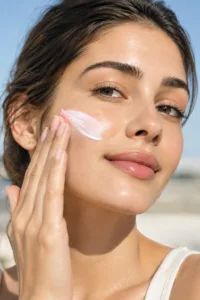
Sunscreen is tested at a thick layer, about two milligrams of product for every square centimetre of skin. Most people apply a quarter to half of that. With a thinner layer, the protection you actually get can be far lower than the label, so SPF 30 applied properly can beat SPF 60 applied thinly. Our guide on how to apply sunscreen on your face shows the right amount, which is roughly two finger-lengths of product for the face and neck.
A higher SPF does not last longer
SPF 60 does not give you twice as many hours in the sun. Sunscreen wears off through sweat, rubbing, water and time, so every sunscreen needs reapplying about every two hours outdoors, and after swimming or heavy sweating.
Broad spectrum matters as much as SPF
A high SPF that only covers UVB leaves you exposed to UVA. Choose a product that is labelled broad spectrum, and treat it as essential.
Consistency beats strength
The best sunscreen is the one you are willing to wear every day. A comfortable SPF 30 that you use daily protects better than an SPF 60 you skip because it feels greasy. If texture is your problem, read our post on non-greasy sunscreen for the face.
Which SPF Should You Choose
| Situation | A sensible choice |
|---|---|
| Indoors most of the day, near windows | Broad-spectrum SPF 30 or higher |
| Commuting, errands, daily outdoor time | SPF 30 to 50, reapplied if you are outside for long |
| Long hours in strong sun, sports, travel, hills or water | SPF 50 or 60, plus shade, hat and sunglasses |
| Skin prone to dark spots or melasma | SPF 50 or higher, used every day and reapplied |
| Fair skin, a history of sunburn or skin cancer | SPF 50 or higher, and ask your dermatologist |
| After peels, lasers or strong actives | High SPF, and follow your dermatologist’s advice |
In much of Pakistan, UV levels are high for a large part of the year, so a high SPF is a reasonable everyday choice if you spend time outdoors. If you tolerate it and apply enough, SPF 50 or 60 adds a small safety margin on top of SPF 30.
SPF and Skin Tone
Melanin gives deeper skin tones some natural protection from the sun, but not enough to prevent sun damage, premature ageing or skin cancer. It also does not stop sun exposure from darkening existing marks. That is why dermatologists recommend daily broad-spectrum sunscreen for every skin tone. If you have a medium to deeper skin tone and struggle with white cast, look for a formula that blends in well, or a tinted one, and judge it by whether you will wear it daily.
Chemical vs Mineral Sunscreen
Sunscreens use two kinds of filters. Mineral filters, such as zinc oxide and titanium dioxide, sit on the skin and reflect and scatter UV. Chemical filters absorb UV and convert it to heat. Both types can give broad-spectrum protection when they are well formulated and applied properly.
The choice usually comes down to feel and skin type. Mineral formulas can leave a white cast on deeper skin tones, and some people with sensitive skin prefer them. Chemical formulas tend to feel lighter and blend in more easily. Tinted formulas with iron oxide add protection against visible light, which can help if you are trying to fade dark spots. Pick the type you will actually use every day.
Common Sunscreen Myths
- SPF 60 is twice as strong as SPF 30: it is only slightly stronger, because both already block most UVB.
- Higher SPF means I can stay out longer: it does not, and reapplying matters at any SPF.
- I do not need sunscreen on cloudy days: UV rays pass through clouds.
- Darker skin does not need sunscreen: deeper skin tones can still burn, and sun exposure darkens dark spots and marks. Our guide to how to get rid of dark spots on face explains why sunscreen comes first.
- Sunscreen is only for the beach: daily incidental exposure adds up, including UVA through windows.
- One application lasts all day: it does not, and reapplication is part of the routine.
How to Get the Most From Your Sunscreen
- Apply sunscreen as the last skincare step in the morning, after moisturiser.
- Use enough: about two finger-lengths for the face and neck.
- Cover the easily missed areas: ears, hairline, the sides of the neck and the back of the hands.
- Wait about 15 minutes before heading out if the directions say so.
- Reapply about every two hours when outdoors, and after swimming or sweating.
- Add sunglasses, a hat and shade during the strongest hours of sun.
Reapplying over makeup
Reapplying over makeup is the step most people skip. Options include a sunscreen stick, a mist, or a small amount of lotion patted gently over the skin. If you stay indoors, you may not need to reapply, but if you are outside for hours, plan for it. Keep sunscreen away from the heat of a parked car, because high temperatures can break the formula down, and check the expiry date before each season.
Where Nøréva Sun Block SPF 60 Fits
Full disclosure: this is our own product, so weigh this section with that in mind. The Nøréva Sun Block SPF 60 is a 60g, broad-spectrum sunscreen that protects against UVA and UVB. The product page describes it as a lightweight, non-greasy formula that is non-comedogenic, paraben-free, dermatologically tested and suitable for all skin types. The directions say to apply liberally as the last step of your morning routine, 15 to 20 minutes before sun exposure, and to reapply every two hours and after swimming, sweating or towel drying.
The product page does not give a PA rating or a water resistance claim, so we will not add one here. It is a reasonable option if you want a high SPF for daily wear or long outdoor days and you will apply it generously. As with any new sunscreen, patch test first if your skin is sensitive, and stop use and see a dermatologist if irritation occurs.
When to See a Dermatologist
- A mole or spot that changes: growth, a new colour, an irregular border, bleeding or itching.
- Frequent sunburn or a family history of skin cancer: a skin check and personal advice are worth having.
- Persistent dark patches: these may be melasma and need targeted treatment.
- Reactions to sunscreen: a dermatologist can help you find a formula your skin tolerates.
FAQs
Is SPF 60 better than SPF 30?
Slightly, for UVB protection, if you apply the same amount. The difference is small, and applying enough and reapplying matter more than the number.
What SPF should I use every day?
Dermatologists recommend at least SPF 30, broad spectrum, every day. Choose higher if you spend long hours outdoors or have skin prone to dark spots.
Does a higher SPF last longer?
No. All sunscreens need reapplying about every two hours when you are in the sun.
Can SPF 60 prevent tanning completely?
No sunscreen blocks all UV. Some UV always reaches the skin, so shade and clothing add protection.
Is SPF 100 worth it?
It blocks only slightly more than SPF 50 and can encourage people to stay out longer. SPF 50 to 60 applied properly is enough for most people.
Do I need sunscreen indoors?
If you sit near a window or spend much of the day by bright light, UVA can still reach you. A daily application is a simple habit worth keeping.
Should I use a different sunscreen for my face and body?
Many people prefer a lighter formula for the face. Whatever you use, apply enough and reapply.
Does sunscreen expire?
Yes. Check the date on the pack, and throw away sunscreen that has changed smell, colour or texture, or that has been left in heat for long.
Is water-resistant sunscreen necessary?
Only if you swim or sweat heavily. Water resistance is limited in time, so reapply after swimming or sweating either way.
A Simple Daily Sun Plan
Pick one broad-spectrum sunscreen you like, apply two finger-lengths to your face and neck every morning, and keep a travel size to reapply. On long outdoor days, add a hat, sunglasses and shade. For more routine ideas, see our skincare routines guide, read how to get rid of dull skin for what sunscreen does for brightness, or browse the Nøréva shop.
References
- American Academy of Dermatology Association: sunscreen FAQs and sun protection guidance (aad.org).
- Skin Cancer Foundation: understanding SPF and broad-spectrum protection (skincancer.org).
- U.S. Food and Drug Administration: sunscreen, how to help protect your skin from the sun (fda.gov).