If you’ve ever skipped sunscreen because it left your face shiny, sticky, or looking like a grease slick by noon, you’re not alone — it’s one of the most common reasons people skip SPF altogether. The good news: “non-greasy” and “high protection” aren’t mutually exclusive anymore.
Why Greasy Sunscreen Happens
Traditional sunscreens, especially older chemical formulas, rely on oil-based carriers to spread UV filters evenly. That’s effective for protection but can leave a heavy, occlusive film — especially on oily or combination skin, where it mixes with natural sebum and slides around.
What Makes a Sunscreen Genuinely Non-Greasy
- Lightweight, fast-absorbing carriers instead of heavy oils
- Non-comedogenic formulation — won’t clog pores or trap oil underneath
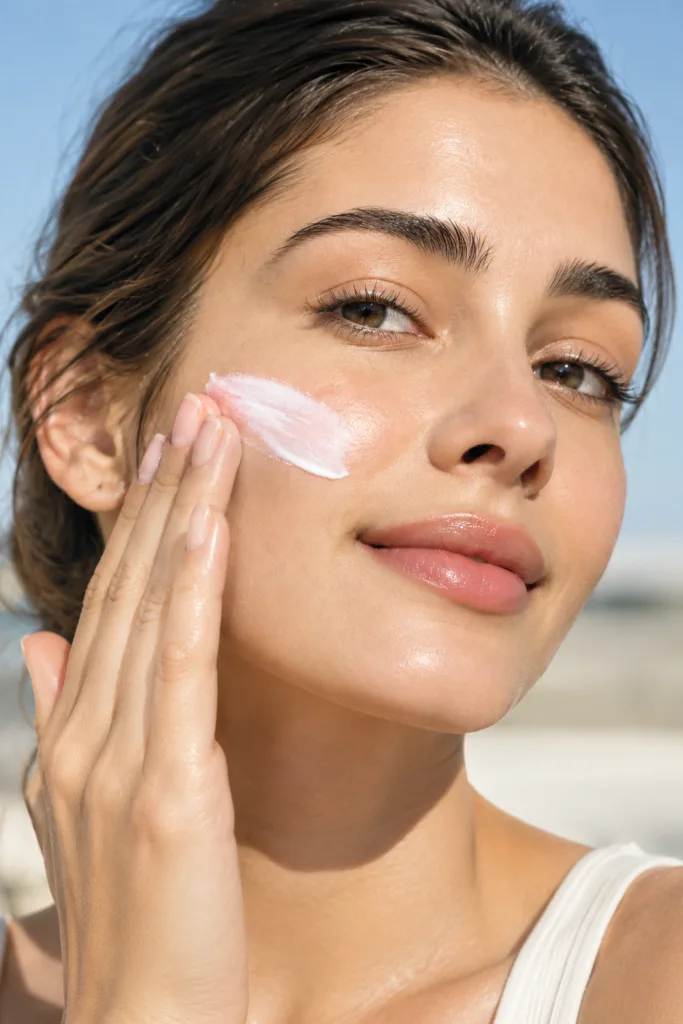
- An invisible finish — no white cast, no visible sheen once it sets
- A moisturising (not occlusive) texture — hydrates without adding surface oil
SPF Still Matters More Than Texture
It’s worth saying plainly: the best sunscreen is the one you’ll actually wear every day. A high-SPF, broad-spectrum formula that feels good under makeup and moisturiser beats a “better” sunscreen left in the drawer.
| Feature | Why It Matters |
|---|---|
| SPF 60 | Very high protection for extended outdoor exposure |
| Broad spectrum (UVA + UVB) | UVA drives premature aging; UVB causes sunburn — you need protection from both |
| Non-comedogenic | Won’t contribute to clogged pores or breakouts |
| Invisible, non-greasy finish | Makes daily use realistic, not a chore |
How to Apply Sunscreen So It Actually Works
- Apply as the last step of your morning routine, after moisturiser and before makeup
- Use a generous amount — most people apply far less than the tested amount, which lowers real-world SPF
- Reapply every 2 hours when outdoors, and immediately after swimming, sweating, or towel drying
- Don’t skip it on cloudy days — up to 80% of UV rays penetrate cloud cover
Common Sunscreen Myths
- “I have oily skin so I don’t need moisturising sunscreen.” Oily skin still needs hydration; the right formula won’t add extra shine.
- “Higher SPF means I can apply less.” SPF number doesn’t change the amount you need to apply for that protection level.
- “I’m indoors most of the day, so I’m covered.” UVA rays penetrate windows; indoor exposure still adds up.
FAQs
Is SPF 60 necessary, or is SPF 30 enough?
SPF 30 blocks about 97% of UVB rays; SPF 60 blocks slightly more and offers a bigger margin of error for under-application, which is common in real-world use — useful for extended outdoor time.
Can non-greasy sunscreen still protect oily or acne-prone skin?
Yes — look for non-comedogenic, oil-free formulas. These are formulated specifically not to clog pores while still delivering full broad-spectrum protection.
Do I need sunscreen every day, even in winter?
Yes. UV exposure isn’t limited to sunny summer days — UVA rays are present year-round and penetrate clouds and windows.
The Takeaway
The best sunscreen is a non-greasy, broad-spectrum one you’ll actually reach for every single morning. Explore Nøréva’s Sun Block SPF 60, built with a non-greasy, invisible finish for daily wear, or see our full skincare routines guide.