If your face feels tight, rough or itchy right after washing, the cleanser is probably part of the problem. Dry skin has less oil to protect it, so a face wash that strips even a little too much leaves it uncomfortable for hours. The fix is rarely a stronger moisturiser alone. It usually starts with choosing a gentler cleanser and washing in a way that leaves your skin’s own moisture in place.
Short answer: the best face wash for dry skin is a gentle, fragrance-free cleanser with a creamy or lotion-like texture that cleans without a tight, squeaky feeling. Wash with lukewarm water, keep the contact short, pat dry, and apply moisturiser within a few minutes. Ingredients such as glycerin and hyaluronic acid add comfort, but they do not replace a serum and moisturiser.
This guide explains the difference between dry and dehydrated skin, what to look for in a cleanser, what to avoid, how to wash properly, and how to build a simple routine around a hydrating face wash.
Dry Skin vs Dehydrated Skin
People use these words as if they mean the same thing, but they describe different problems. The difference changes which products help most.
| Dry skin | Dehydrated skin | |
|---|---|---|
| What is missing | Oil (lipids) | Water |
| Skin type or condition | A skin type, often lifelong | A temporary condition that can affect any skin type, including oily skin |
| How it feels | Rough, flaky, tight, sometimes itchy | Tight, dull, with fine lines that show, even if skin looks shiny |
| What helps most | Gentle cleansing, richer moisturisers, barrier support | Humectants such as hyaluronic acid, plus a moisturiser to seal them in |
Many people have a mix of both. Either way, a gentle cleanser is the first step.
What a Cleanser Should Do for Dry Skin
A cleanser has one job: remove dirt, sweat, sunscreen and excess oil from the surface. For dry skin, the goal is to do that without removing the natural oils and fats that make up your skin barrier. This barrier keeps water in and irritants out. When it is disturbed, skin feels tight, stings when you apply products, and flakes.
What to Look For in a Face Wash for Dry Skin
- Gentle cleansing agents: creamy, lotion, milk or low-foam washes tend to be kinder than strongly foaming ones.
- Humectants: glycerin and hyaluronic acid attract water and make skin feel softer and more comfortable while you wash.
- Soothing or barrier-friendly ingredients: ceramides, plant oils and similar ingredients help skin feel less stripped.
- No added fragrance: fragrance is a common cause of irritation in dry and sensitive skin.
- A rinse-off feel that is soft, not squeaky: if your skin squeaks or feels tight after rinsing, the cleanser is too strong for you.
Label cheat sheet
| Ingredient on the label | What it does | Good for dry skin? |
|---|---|---|
| Glycerin | Draws water into the skin and softens it | Yes |
| Hyaluronic acid | Holds water at the skin surface | Yes, for comfort |
| Ceramides | Help support the skin barrier | Yes |
| Strong foaming sulfates | Create thick lather and remove oil strongly | Often too drying, depending on the formula |
| Added fragrance | Gives a scent | Best avoided if skin is sensitive |
| Denatured alcohol | Evaporates quickly and removes oil | Can be drying |
A label does not tell the whole story, because the overall formula matters more than any single ingredient. Use it as a guide, then trust how your skin feels after washing.
What to Avoid
- Bar soap and harsh foaming cleansers: these can leave dry skin tight and flaky.
- Scrubby cleansers: physical scrubs scratch and inflame dry skin.
- Alcohol-heavy and strongly scented products: both can dry out or irritate.
- Hot water: it strips oils and worsens dryness, so lukewarm water is better.
- Very frequent washing: washing more than twice a day, or scrubbing after every sweat, is more than dry skin needs.
- Layering strong actives: acids and retinoids on top of a drying cleanser can overload the barrier.
How to Wash Dry Skin
- Wet your face with lukewarm water. Hot water feels pleasant but dries skin out.
- Put a small amount of cleanser in your palm and massage it gently over your face for 30 to 60 seconds. Light circular motions are enough.
- Rinse thoroughly with lukewarm water, especially around the hairline and jaw.
- Pat your face dry with a clean towel. Rubbing irritates dry skin.
- While skin is still slightly damp, apply a hydrating serum if you use one, then a moisturiser, and sunscreen in the morning.
If your skin is very dry, some dermatologists suggest rinsing with plain lukewarm water in the morning and using a cleanser only at night to remove sunscreen and the day’s buildup. Many people do well with a gentle wash twice a day. Let your skin’s comfort guide you.
What Hyaluronic Acid Can and Cannot Do in a Face Wash
Hyaluronic acid is a humectant, which means it attracts and holds water. In a leave-on serum it can make a visible difference to how plump and comfortable skin feels. In a face wash, it is on your skin for about a minute before you rinse it off.
The realistic benefit is comfort. A cleanser with hyaluronic acid can leave skin feeling soft and less tight than a harsh cleanser does. It will not replace a hydrating serum or moisturiser, and it will not repair a damaged barrier by itself. Our guide to hyaluronic acid benefits for skin explains how to use it in a serum for a bigger effect.
A Simple Routine for Dry Skin
| Step | Morning | Evening |
|---|---|---|
| 1 | Gentle hydrating cleanser, or water only if very dry | Gentle hydrating cleanser |
| 2 | Hydrating serum on slightly damp skin | Hydrating serum |
| 3 | Moisturiser | Richer moisturiser |
| 4 | Broad-spectrum sunscreen | Not needed |
For sunscreen, our posts on non-greasy sunscreen for the face and how to apply sunscreen on your face explain what to choose and how much to use. If you also want a brighter look, read how to get rid of dull skin, which includes a four-week plan.
Other Reasons Your Skin Feels Dry
A cleanser is only one piece. If dryness continues after you switch to something gentler, look at the other causes:
- Weather and indoor air: cold, dry air, heaters and air conditioning pull moisture from skin.
- Long, hot showers: these strip natural oils from skin on your face and body.
- Active ingredients: retinoids and strong acids dry skin as they start working. Our post on using retinol serum without irritation explains how to introduce them gradually.
- Over-exfoliating: too many scrubs or acids damage the barrier.
- Medical causes: eczema, dermatitis, thyroid problems and some medicines can cause dry skin, and these need a doctor.
Where Hyaluréa Fits
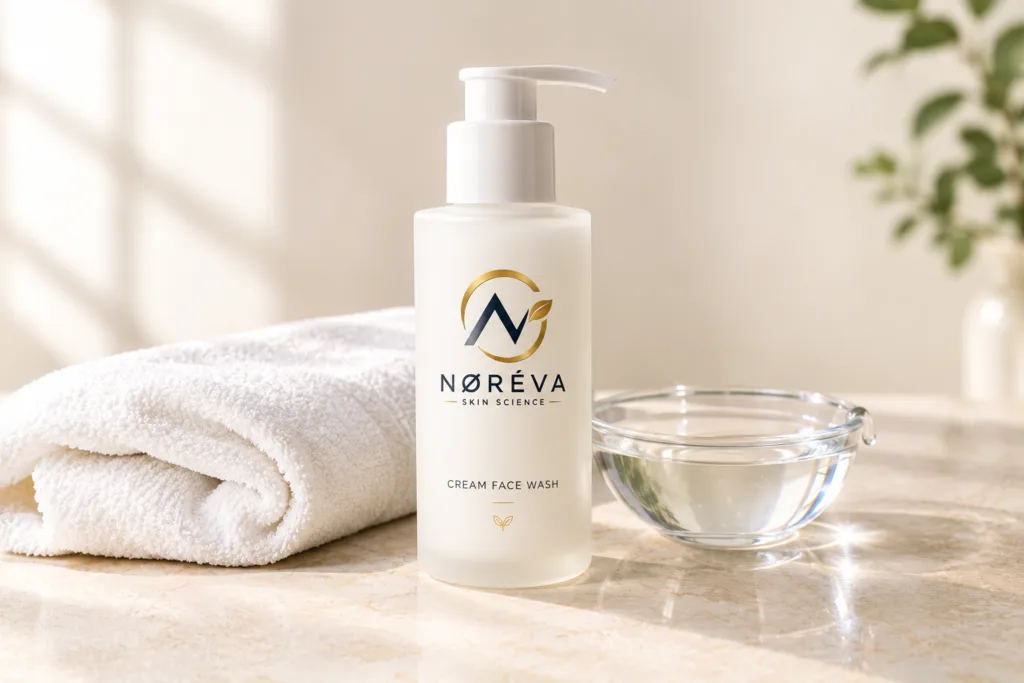
Full disclosure: this is our own product, so weigh this section with that in mind. The Nøréva Hyaluréa Hyaluronic Face Wash comes in a 120ml bottle and lists hyaluronic acid as its key ingredient. The brand describes it as a gentle daily cleanser that helps skin stay hydrated so it feels soft and comfortable instead of tight and stripped. It is described as suitable for sensitive skin and for all skin types, and the directions say to use it morning and evening, followed by a hydrating serum such as Nova-H and a moisturiser.
The realistic expectation is a comfortable, gentle cleanse for dry, dehydrated or sensitive skin, with the hydrating benefit coming mostly from your serum and moisturiser afterwards. The product page does not give a concentration, so we will not guess at one. Patch test first if your skin is very sensitive, and avoid contact with the eyes.
How it compares with other Nøréva face washes
- Hyaluréa: for dry, dehydrated and sensitive skin.
- Charéva Charcoal: for oily, congested skin. See our guide to charcoal face wash benefits.
- Neem & Tea Tree: for acne-prone, oily skin.
- Brightening Vitamin C: for dull, uneven-looking skin. See vitamin C face wash benefits.
If your skin is oily, our guide to a face wash for oily skin is the better starting point.
Common Mistakes
- Judging a cleanser by how clean it makes skin feel: the squeaky, tight feeling means too much oil is gone.
- Skipping moisturiser after washing: moisture escapes quickly from bare, damp skin.
- Using very hot water: this dries skin and increases irritation.
- Switching products constantly: dry skin needs a stable, simple routine.
- Adding strong actives all at once: introduce one at a time, two weeks apart.
- Ignoring sunscreen: dry, irritated skin is more reactive to sun, and daily SPF protects it.
How Long Before Skin Feels Better
You may notice that skin feels more comfortable after a few days of gentler washing. Flaking and roughness take longer to settle, often two to four weeks of a consistent routine. If skin still feels tight, flaky or itchy after a month, speak to a doctor or dermatologist.
When to See a Dermatologist
- Red, itchy or scaly patches: these can be eczema or dermatitis, which need proper treatment.
- Cracked or bleeding skin: this is more than ordinary dryness.
- Dryness that does not improve: especially after a month of gentle care.
- Dry skin with other symptoms: such as tiredness, hair changes or weight changes, which may point to a health condition.
FAQs
What is the best face wash for dry skin?
One that cleans gently without leaving skin tight: creamy or lotion-like, fragrance-free where possible, and ideally containing humectants such as glycerin or hyaluronic acid.
Should I wash my face twice a day if my skin is dry?
Many people can. If your skin is very dry, you can use plain lukewarm water in the morning and a gentle cleanser at night.
Is a hyaluronic acid face wash good for dry skin?
It can be a comfortable, gentle choice. The hydrating effect of a wash is modest, so follow it with a serum and moisturiser.
Can I use a face wash for dry skin if my skin is oily?
Yes, if it feels comfortable. Dehydrated skin can also be oily, and a gentle cleanser suits it too, as long as it removes oil and sunscreen well enough.
Why does my skin feel tight after washing?
The cleanser or the water is probably too harsh, and the skin barrier has lost some of its natural oils. Switch to a gentler cleanser, lower the water temperature, and moisturise straight away.
Should I exfoliate dry skin?
Rarely, and gently. Once a week at most with a mild product, and only if your skin is not irritated.
Does drinking water fix dry skin?
Staying hydrated is good for health, but extra water will not fix dry skin by itself. Topical care and gentler habits matter more.
A Simple Plan to Start With
Swap to a gentle cleanser, lower the water temperature, and moisturise within a few minutes of washing. Keep everything else the same for two weeks. If your skin settles, add a hydrating serum, then sunscreen if you are not already using it. For more routine ideas, see our skincare routines guide or browse the Nøréva shop.
References
- American Academy of Dermatology Association: dermatologists’ tips for managing dry skin (aad.org).
- American Academy of Dermatology Association: how to wash your face (aad.org).
- Mayo Clinic: dry skin, symptoms and causes (mayoclinic.org).