You have a cleanser, a serum or two, an eye product, a moisturiser and a sunscreen. Which one goes on first? Does the order matter, or is it enough to use everything? It does matter, a little. The right order helps each product reach your skin and do its job, and the wrong order can leave serums sitting on top of a heavy cream, cause pilling, or put an exfoliating acid and a retinol on the same night. The good news is that there is a simple logic behind the order, and once you know it, you can layer any routine without memorising lists.
Short answer: apply products from the thinnest, most watery texture to the thickest, and finish with sunscreen in the morning. A typical order is cleanser, treatment serum, hydrating serum, eye product, moisturiser and then sunscreen. Use strong actives such as retinol and exfoliating acids at night, on separate nights. Start with three steps, add one new product at a time, and give each a couple of weeks before judging it.
This guide explains the thinnest-to-thickest rule, gives you a morning and an evening order, shows which ingredients work together and which should be kept apart, and explains what to do if products pill or sting.
The Basic Rule: Thinnest to Thickest
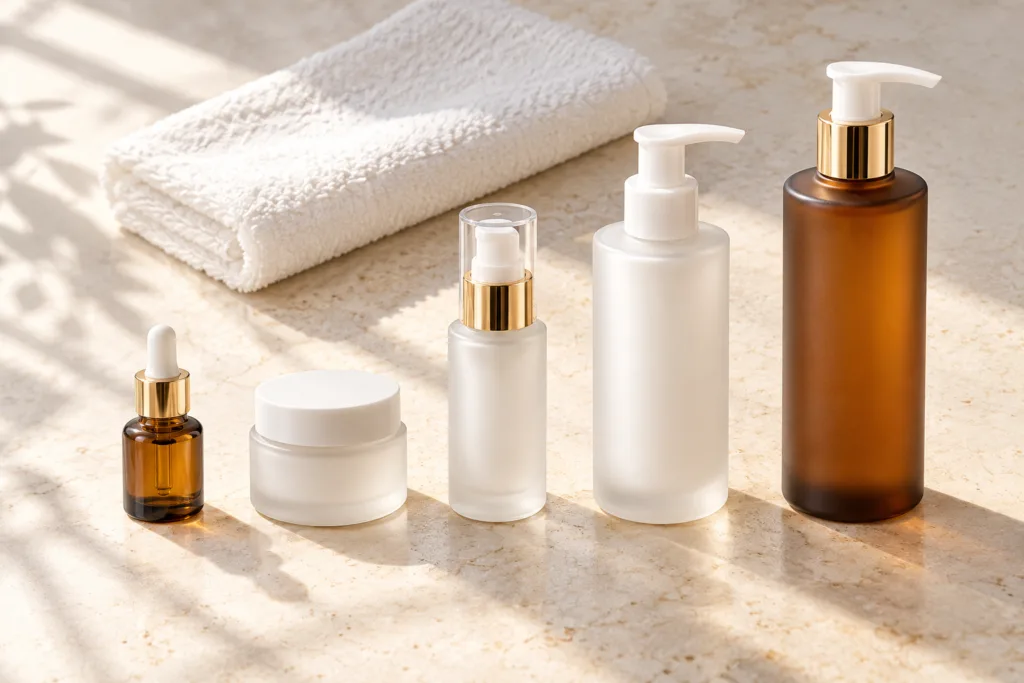
Skin absorbs lightweight, water-based products more easily than thick, oily ones. If you apply a rich cream first, it forms a layer that can block a watery serum from getting through. So the general rule is this:
- Cleanse first: products work best on clean skin.
- Water-based products next: toners, essences and serums.
- Eye products: they usually sit between serum and moisturiser.
- Moisturiser: this seals in what is underneath.
- Oils and occlusives: thick balms and face oils go after moisturiser, because their job is to lock moisture in.
- Sunscreen last in the morning: it needs to sit on top of the skin to protect it.
There are exceptions, and the product directions come first. Some treatments, such as vitamin C, are designed to go on clean, dry skin before anything else, and the directions on each Nøréva product page say so. When the label and a general rule disagree, follow the label.
Morning Order
Mornings are about protection. The goal is to hydrate, protect against environmental stress and finish with sunscreen.
| Step | Product | Notes |
|---|---|---|
| 1 | Gentle cleanser | Lukewarm water, short massage, pat dry. Use water only if your skin is very dry. |
| 2 | Vitamin C serum | The Nova-C directions say to apply to clean, dry skin, before moisturiser and sunscreen. |
| 3 | Hydrating serum | The Nova-H directions say to apply to clean, slightly damp skin, morning and or evening. |
| 4 | Eye product | The Eye Roll-On goes after cleansing and serum, before moisturiser. |
| 5 | Moisturiser | Seals in the layers underneath. |
| 6 | Sunscreen | Last step, generous amount, reapply outdoors. |
If you use both Nova-C and Nova-H, apply the vitamin C first on dry skin as its directions say, give it a minute to settle, and then add the hydrating serum. The Nova-H page says it pairs well with vitamin C in the morning as part of a layered routine. For more on vitamin C, read our guide to using vitamin C serum.
Sunscreen is the step that matters most for results. Our guides to SPF 30 vs SPF 50 vs SPF 60 and how to apply sunscreen on your face show how much to use and when to reapply. The Nøréva Sun Block SPF 60 is a broad-spectrum option made to be the last step of your morning routine.
Evening Order
Evenings are about cleansing and treating. Skin repairs itself overnight, and strong actives are best used at night because many of them make skin more sensitive to the sun.
| Step | Product | Notes |
|---|---|---|
| 1 | Cleanser | Thorough enough to remove sunscreen and, in smog season, dust and pollution. |
| 2 | Treatment | One active per night: retinol or an exfoliating acid, not both. |
| 3 | Hydrating serum | On slightly damp skin, especially if your active is drying. |
| 4 | Eye product | Same position as in the morning. |
| 5 | Moisturiser | A richer one at night if skin is dry. |
| 6 | Occlusive, optional | A thin layer over dry patches only. |
Choosing a night type
Most people do best when they give each evening a single job. Here is a simple rotation.
- Retinol night: the Nøréva Retinol Serum directions say to apply to clean, dry skin in the evening, avoid the eye area, follow with moisturiser, and introduce gradually at two to three nights a week. See our guide to using retinol serum without irritation.
- Acid night: the Nova-AC Anti-Acne Serum directions say to start every second night and follow with a lightweight moisturiser. Its page advises against using it at the same time as other strong exfoliating acids or retinol. Our post on mandelic acid for acne explains how it works.
- Recovery night: cleanse, hydrate and moisturise only. This is where your skin catches up, and it matters more than it sounds.
A simple pattern is retinol on Monday, recovery on Tuesday, acid on Wednesday, recovery on Thursday, and so on, adjusted to what your skin tolerates.
What Can Share a Routine and What Should Not
| Combination | Verdict | Why |
|---|---|---|
| Vitamin C and sunscreen | Works well | Vitamin C is an antioxidant that suits the morning alongside sunscreen. |
| Vitamin C and hyaluronic acid | Works well | A brightening serum plus a hydrating one, as the Nova-H page suggests. |
| Vitamin C in the morning and retinol at night | Works well | Different times of day, so they do not compete. |
| Hyaluronic acid and almost anything | Works well | It is a gentle hydrator that fits most routines. |
| Retinol and mandelic acid on the same night | Avoid | The Nova-AC page advises against using it with retinol at the same time. Both can dry and irritate. |
| Two exfoliating acids on the same night | Avoid | Too much exfoliation damages the skin barrier. |
| Actives and physical scrubs | Avoid | Friction plus chemical exfoliation is a fast route to irritation. |
| Strong actives and a damaged barrier | Pause | Rest your skin first. See how to repair your skin barrier. |
If you are unsure about a combination, use the products at different times of day or on different nights. That solves most compatibility questions without needing a chemistry degree.
How Long to Wait Between Steps
There is no strict rule, and most people overthink it. A reasonable guide:
- Between serums: about 30 to 60 seconds, so each one settles instead of mixing into a sticky layer.
- After an exfoliating acid or retinol: wait until the skin feels dry before the next step if your skin is easily irritated, and apply moisturiser after.
- Before sunscreen: let your moisturiser absorb for a minute or two, so sunscreen goes on smoothly.
- Before makeup: allow sunscreen to settle for several minutes.
Waiting for skin to be completely dry is rarely necessary, except for products whose directions say to apply on dry skin, like vitamin C and retinol.
How Many Products Is Too Many
More steps do not mean better results. A routine of three to five steps is enough for most people, and every extra product raises the chance of irritation and makes it harder to know what works.
- Start with a cleanser, a moisturiser and sunscreen.
- Add one targeted product, such as a serum for your main concern.
- Wait two weeks before adding anything else.
- Add one more only if your skin is calm and you have a clear reason.
If dullness is your main goal, our guide to how to get rid of dull skin has a four-week plan built on this idea.
Layering for Different Skin Needs
- Dry or sensitive skin: keep it simple, add the hydrating serum on damp skin, and use a richer moisturiser. See our guides to a face wash for dry skin and a winter skincare routine.
- Oily or acne-prone skin: use light textures, gel or lotion moisturisers, and one active at a time. Read tea tree oil for acne and the guide to a face wash for oily skin.
- Dark spots: vitamin C in the morning, a gentle treatment at night, and strict sunscreen. See how to get rid of dark spots on face.
- Tired eyes: keep the eye product after serum and before moisturiser. Our post on how to get rid of dark circles explains what to expect.
- Not sure of your skin type: start with how to know your skin type.
Pilling and Stinging: What Went Wrong
Pilling
Pilling is when products ball up into little crumbs on the skin. Common causes are applying too much, layering too fast, mixing a silicone-based product with a water-based one, or rubbing instead of pressing. Use less, wait between steps, and press products in gently.
Stinging
Stinging usually means too many actives, a damaged barrier, or a product your skin does not like. Stop the newest product, simplify your routine for two weeks, and patch test before you reintroduce anything.
Common Mistakes
- Putting thick cream before serum: the serum cannot get through.
- Using several strong actives on the same night: irritation follows, and so do dark marks.
- Skipping sunscreen after using exfoliants or retinol: these make skin more sun-sensitive.
- Adding five new products at once: you cannot tell what helps or what irritates.
- Using too much product: a few drops of serum is enough, and extra does not work better.
- Ignoring the label: follow each product’s own directions first.
When to See a Dermatologist
- Persistent burning, redness or peeling: especially if it continues after you simplify.
- Itchy, scaly or cracked patches: these may be eczema or dermatitis.
- Deep or painful acne: it can scar and needs medical treatment.
- Pregnancy or breastfeeding: ask about retinoids and acids before use.
- No improvement after two months: a professional can help find what is missing.
FAQs
Do I apply serum before or after moisturiser?
Before. Serums are thinner and water-based, so they go on first, and moisturiser seals them in.
Does eye cream go before or after serum?
After serum and before moisturiser, which is also what the Nova-H and Eye Roll-On directions suggest.
Can I use vitamin C and retinol together?
Many people use vitamin C in the morning and retinol at night. Using them at different times of day avoids most irritation.
Do I need a toner?
No. A toner is optional, and a simple routine works well without one. If you like one, choose a gentle, alcohol-free formula.
Does sunscreen go before or after moisturiser?
After. Sunscreen is the final skincare step in the morning.
Where does face oil go?
After moisturiser, as a final layer at night. Oils are meant to lock moisture in, so they should not go under water-based products.
Can I mix products in my hand?
It is better not to, because mixing can change how products behave. Apply them one after the other instead.
How long should I wait before I decide a product is not working?
Give most products at least four to eight weeks, unless your skin is irritated, in which case stop sooner.
A Simple Layering Cheat Sheet
| Time | Order |
|---|---|
| Morning | Cleanser, vitamin C serum, hydrating serum, eye product, moisturiser, sunscreen |
| Evening, retinol night | Cleanser, retinol, hydrating serum, eye product, moisturiser |
| Evening, acid night | Cleanser, exfoliating acid, moisturiser |
| Evening, recovery night | Cleanser, hydrating serum, eye product, moisturiser |
For more routines, see our skincare routines guide or browse the Nøréva shop.
References
- American Academy of Dermatology Association: skin care basics and routine guidance (aad.org).
- American Academy of Dermatology Association: sunscreen guidance (aad.org).
- Mayo Clinic: skin care, tips for healthy skin (mayoclinic.org).