Leave-on scalp sprays sit in an awkward space in hair care. They are sold with words like density, fuller and follicle, they cost more than shampoo, and they are easy to overestimate. If you are noticing a wider parting, a thinner ponytail or more hair in the brush, a spray can be a reasonable part of your routine. It works best when you know what it can do, how to use it, and when a doctor should come first.
Short answer: a scalp spray with peptide ingredients is a supportive care product, not a proven treatment for hair loss. Most of the published data on these ingredients comes from the ingredient suppliers and small studies, and independent evidence is limited. Use it consistently on a clean scalp once or twice a day, give it at least three to six months, take photos to track change, and see a doctor if loss is sudden, patchy or heavy, because treatments with stronger evidence exist.
This guide explains how hair grows, what scalp sprays contain, what the evidence says, how to use one properly, and how to build a routine around it.
How Hair Grows and Why It Thins
Each hair follicle cycles through phases. The growth phase, called anagen, lasts years. A short transition phase follows, then a resting phase, called telogen, after which the hair sheds and a new one starts. At any time most of your hairs are growing, and a small share are resting. Losing some hair every day is normal.
Thinning happens when the balance shifts. Common reasons include:
- Genetics and hormones: pattern hair loss is the most common cause. In men it often shows as a receding hairline or crown. In women it often shows as a wider parting and less density on top.
- Temporary shedding: illness, fever, surgery, childbirth, sudden weight loss or severe stress can push many hairs into the resting phase at once, and they shed a few months later.
- Nutritional gaps: low iron or vitamin D, among other things, can contribute.
- Thyroid and hormonal conditions: these can change hair thickness.
- Scalp conditions: inflammation or infection can damage hair.
- Hair damage: tight styles, heat and chemical treatments cause breakage that looks like thinning.
Our guide on how to stop hair fall covers these causes in more detail, and it is worth reading before you choose any product.
What Is in a Peptide Scalp Spray
Many scalp sprays use branded peptide and plant complexes. Common names include Capixyl (which contains the peptide acetyl tetrapeptide-3), Anagain (oleanolic acid) and Procapil. They are sold on the idea that they support follicles and keep more hairs in the growth phase. Sprays often add supportive ingredients such as biotin, panthenol and niacinamide for scalp condition. Our post on peptides for hair growth explains these ingredients.
What the Evidence Says
It helps to separate three levels of evidence.
| Option | Evidence level | Notes |
|---|---|---|
| Topical minoxidil | Strong, well studied | Widely used for pattern hair loss, available in various strengths, can irritate the scalp, and needs long-term use to keep results |
| Prescription treatments such as oral finasteride (men) and other options chosen by a doctor | Strong for specific groups | Needs a medical consultation and has side effects to discuss |
| Peptide and plant-based scalp sprays | Limited, often supplier-led | Small studies report effects on hair density, but independent, large trials are scarce |
| Biotin and general scalp care | Weak for hair growth in healthy people | Biotin matters in confirmed deficiency, which is rare. See does biotin shampoo work |
That does not make scalp sprays useless. A comfortable scalp, less breakage and a consistent routine can all help hair look fuller. It does mean you should not expect a spray to reverse genetic hair loss, and it should not delay a visit to a doctor if your hair loss is significant.
What a Scalp Spray Can and Cannot Do
| What you may hear | Realistic expectation |
|---|---|
| Supports healthy-looking, fuller hair | Possible with consistent use, over months |
| Reduces the look of shedding | Possible for some people, but results vary |
| Eases combing and detangling | Plausible, depending on the formula |
| Regrows hair on a bald area | Unlikely |
| Stops genetic hair loss | No, this needs medical treatment |
| Works in a few weeks | No, hair grows slowly, and any change takes months |
Scalp Health Basics
Hair grows from the scalp, so a healthy scalp is the starting point for any hair routine. A scalp that is itchy, flaky, very oily or inflamed does not support healthy hair, and no spray makes up for that. Wash often enough to keep oil and product from building up, which for many people means every day or every other day. Rinse thoroughly so shampoo does not stay on the skin. Avoid scratching with nails, which damages the skin. Treat dandruff with the right shampoo instead of hiding it. Try to eat a varied diet with enough protein, iron and other nutrients, because hair is a metabolically active tissue and shortages show up in it. These basics are not exciting, but they matter more than any single product.
How to Use a Scalp Spray
These steps follow the directions on the Nøréva Hairgénix Hairspray page, with a few practical additions.
- Start with a clean scalp. Product, oil and dust on the scalp block good contact.
- Part your hair in sections, and spray directly onto the scalp and hair roots rather than the lengths.
- Massage gently with your fingertips to spread it. Do not rinse it out.
- Use it once or twice a day, as the directions say, and keep the routine consistent.
- Wash your hands afterwards and avoid contact with your eyes.
- Take a photo of your parting and crown once a month in the same light.
Do a patch test first if your skin or scalp is sensitive. Many sprays contain fragrance and glycols, which can bother sensitive scalps. If you get itching, redness or burning, stop using it. If you already use minoxidil or another scalp treatment, ask your doctor or pharmacist before layering products, since combining them can irritate the scalp.
A Simple Scalp and Hair Routine
| Step | What to do |
|---|---|
| Wash | Use a gentle shampoo, massage the scalp for two to three minutes, and rinse with lukewarm water |
| Condition | Apply conditioner to the lengths and ends, not the scalp |
| Spray | Apply the scalp spray to roots on a clean scalp, once or twice a day |
| Style gently | Avoid tight ponytails, heavy heat and harsh chemical treatments |
| Review | Compare photos monthly, and see a doctor if you are losing hair fast |
A gentle shampoo helps. Our post on whether biotin shampoo works explains what to expect from one.
How Long Until You Notice a Difference
Hair grows roughly a centimetre a month, and follicles respond slowly to anything you apply. Many products suggest judging results over three to six months. Reduced breakage and a better feel may show up sooner, while changes in density take longer. Keep photos, because small changes are hard to see in a mirror. If you see no change after six months of consistent use, or if loss continues, speak to a doctor.
Where Hairgénix Hairspray Fits
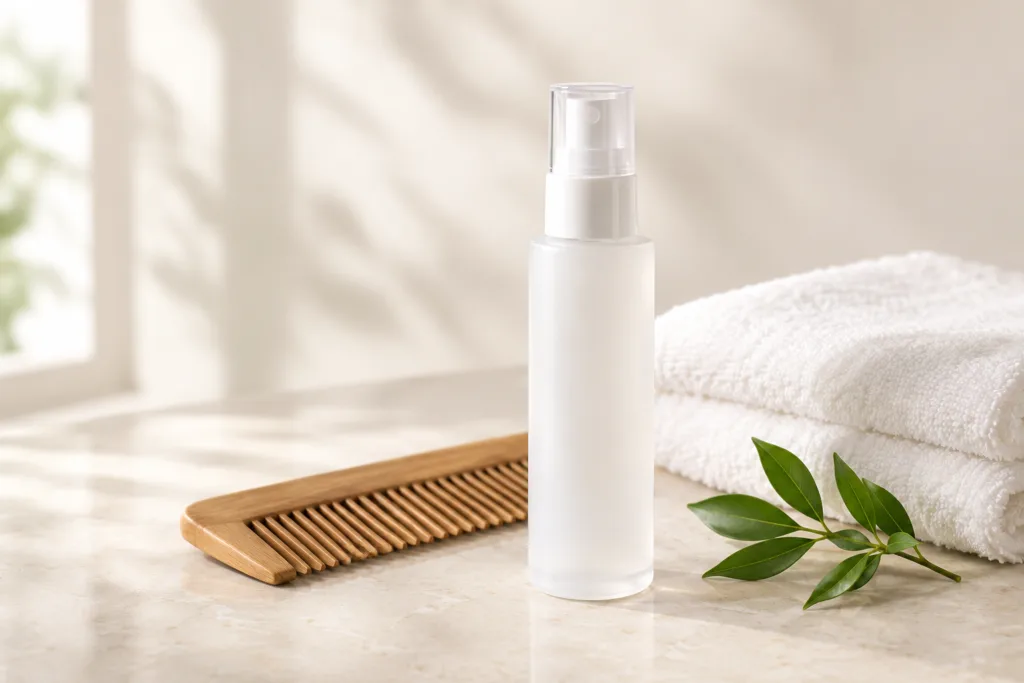
Full disclosure: this is our own product, so weigh this section with that in mind. The Nøréva Hairgénix Hairspray is a 100ml leave-on scalp spray for all hair types. It lists Capixyl (acetyl tetrapeptide-3), Anagain (oleanolic acid), Procapil, Biochanin-A, biotin, panthenol and niacinamide, along with glycerin, propylene glycol and fragrance. The brand describes it as made to support hair density and help reduce the appearance of shedding and thinning with consistent use, and the directions say to spray on the scalp and roots one or two times daily, massage in, and not rinse.
The realistic way to see it is as supportive scalp care that you judge over months, not a treatment for hair loss. The product page does not give concentrations, so we will not guess at them. The page itself advises seeing a doctor or dermatologist for sudden, patchy or severe hair loss, and we agree. Patch test first if your scalp is sensitive, since it contains fragrance and propylene glycol. It pairs with the Hairgénix Biotin & Keratin Shampoo in the range.
Common Mistakes
- Expecting fast results: hair needs months, not weeks.
- Using it as a replacement for a diagnosis: if loss is heavy or sudden, find the cause first.
- Spraying the lengths instead of the scalp: the roots and scalp are the target.
- Stopping and starting: inconsistent use makes results impossible to judge.
- Layering several actives at once: too many products can irritate the scalp.
- Ignoring breakage: heat, tight styles and chemicals can make hair look thin even when the roots are healthy.
- Not tracking progress: without photos, you are guessing.
When to See a Doctor First
- Sudden or patchy hair loss: especially bald spots or clumps coming out.
- A red, painful, scaly or itchy scalp: this can be a scalp condition that needs treatment.
- Heavy shedding that lasts more than a few months: or shedding after illness, childbirth or a new medicine.
- Thinning with other symptoms: such as fatigue, irregular periods, weight changes or excess facial hair.
- A strong family history of hair loss: early assessment gives treatment more room to work.
FAQs
Does a hair growth spray really work?
Some people see improvement in how full their hair looks, but the evidence for peptide sprays is limited and mostly supplier-led. Treatments such as minoxidil have stronger evidence, and a doctor can advise you.
How often should I use a scalp spray?
Follow the product directions. The Hairgénix page says one or two times a day, applied to the scalp and roots, and left in.
Can I use a scalp spray with minoxidil?
Ask your doctor or pharmacist first. Using two scalp products together can irritate the skin and make it hard to tell which product is working.
Should I use it on wet or dry hair?
Either works for most sprays, as long as the scalp is clean. Apply to a slightly damp or dry scalp, and avoid heavy styling products over the same area.
Will a scalp spray make my hair greasy?
It can if you use too much or have an oily scalp. Use the recommended amount, and wash as normal.
Can women use a scalp spray for thinning?
Yes, scalp sprays are made for all genders. Women with sudden thinning, irregular periods or other symptoms should see a doctor to look for hormonal or nutritional causes.
How long should I use it before deciding it does not work?
At least three to six months, with photos at the start and every month. If you see nothing, or you keep losing hair, talk to a doctor.
Is it safe to use a scalp spray every day?
Most people tolerate daily use, as long as the scalp stays comfortable. If you notice itching, redness, burning or flaking, stop and ask a pharmacist or doctor. People with scalp conditions such as psoriasis or seborrheic dermatitis should ask first.
A Simple Plan to Start With
Start with the basics. Rule out medical causes, choose a gentle shampoo, reduce heat and tight styles, and add a scalp spray once your scalp is comfortable. Track photos monthly, give it at least three months, and bring photos to a doctor if you are worried. For more routines, see our skincare and hair care routines guide or browse the Nøréva shop.
References
- American Academy of Dermatology Association: hair loss, types, causes and treatment (aad.org).
- American Academy of Dermatology Association: hair loss in women and men, treatment options (aad.org).
- National Library of Medicine, MedlinePlus: hair loss (medlineplus.gov).