Hyaluronic acid shows up in nearly every “best hydrating ingredients” list for a reason: it’s one of the few skincare ingredients with a genuinely simple, well-understood mechanism, and it works for almost every skin type. Here’s what it actually does, and how to use it well.
What Hyaluronic Acid Actually Is
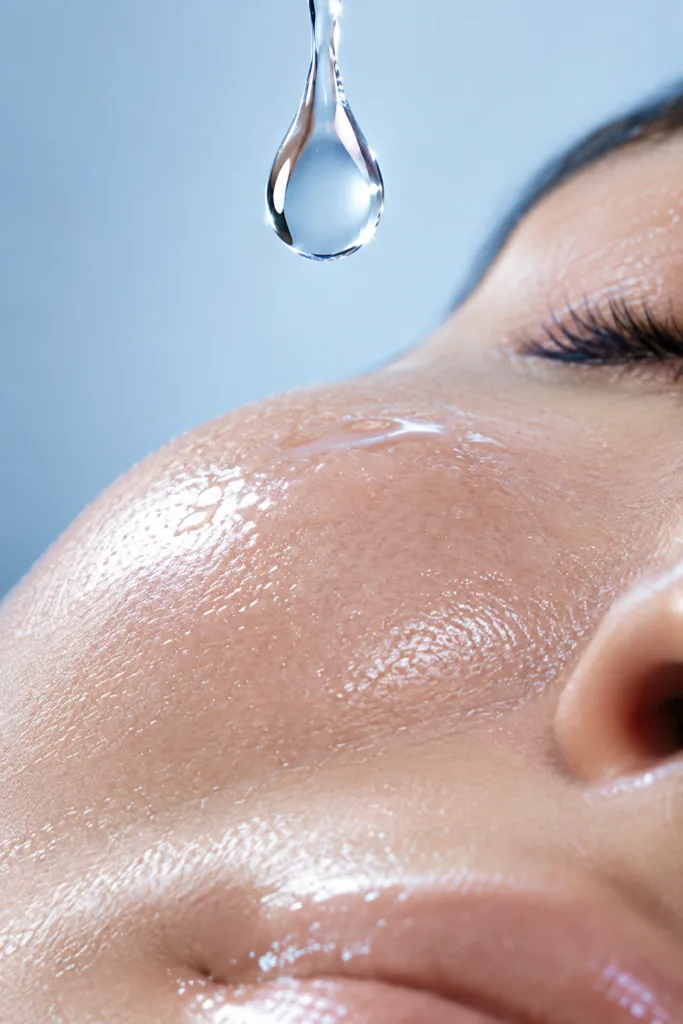
Hyaluronic acid (HA) is a naturally occurring molecule already present in your skin, connective tissue, and eyes. Its defining feature: it can hold up to roughly 1,000 times its weight in water, acting like a moisture magnet and reservoir just beneath the skin’s surface.
The Core Benefits
- Deep hydration — draws and holds moisture in the skin, reducing the look of dryness and roughness
- Plumper, smoother-looking skin — hydrated skin reflects light more evenly, which reads as “glowy”
- Supports the skin barrier — well-hydrated skin is better equipped to resist irritation and moisture loss
- Reduces the appearance of fine lines — not by “filling” them, but by plumping skin so they’re less visually pronounced
- Suits nearly all skin types — including oily and acne-prone skin, since HA is a humectant, not an oil
Why Molecular Weight Matters
Not all hyaluronic acid behaves the same way. Formulas often use a mix of molecular weights:
| Type | What It Does |
|---|---|
| High molecular weight | Sits on the skin’s surface, forming a hydrating film and reducing water loss |
| Low molecular weight | Penetrates deeper into the skin, delivering hydration to lower layers |
| Multi-weight blends | Combine both for surface smoothing and deeper hydration — the approach used in most modern serums |
How to Use Hyaluronic Acid Correctly
This is where most people get less value than they should: hyaluronic acid needs moisture to draw from. Applied to bone-dry skin in a bone-dry room, it can pull water from deeper skin layers instead of the air — the opposite of the intended effect.
- Apply to slightly damp skin (right after cleansing, before it fully dries)
- Follow immediately with a moisturiser to seal in the hydration
- Use both morning and evening for consistent results
- In dry or air-conditioned climates, pair with a humidifier or heavier moisturiser
What to Pair It With
- Vitamin C in the morning — brightening plus hydration, a classic pairing
- Retinol at night — HA helps offset the dryness retinol can cause
- A hyaluronic acid face wash — so hydration starts at cleansing instead of being undone by a stripping cleanser
FAQs
Can hyaluronic acid cause purging or breakouts?
It’s very unlikely — HA is a humectant, not pore-clogging, and is generally considered non-comedogenic. Breakouts after starting a new product are more often linked to another ingredient in the formula.
Is hyaluronic acid better than a regular moisturiser?
They do different jobs. HA draws in moisture; a moisturiser seals it in with occlusive or emollient ingredients. Most routines benefit from both, layered together.
Can I use hyaluronic acid every day?
Yes — it’s one of the few actives considered safe and beneficial for daily, twice-daily use across nearly all skin types.
The Takeaway
Hyaluronic acid is simple, effective, and suits almost everyone — as long as you apply it to damp skin and lock it in with a moisturiser. Explore Nøréva’s Hyaluronic Acid Face Wash and Nova-H Serum to build hydration into every step of your routine.